
Why lithium — without the sales fog
Lithium is not magic and it is not free. It wins on labor, charging time and total cost over several years, and it loses on upfront price and on cold-weather charging rules. Here is the whole picture, including the parts a brochure usually leaves out.
Where the value comes from
Four things change on day one
One pack, one shift
Usable capacity per pack is higher, so many single-shift operations stop changing batteries mid-day — and multi-shift sites often run two packs instead of three.
Charging between tasks
Short top-ups during breaks are normal practice, not a compromise. That removes the "battery must rest and cool" constraint from your shift plan.
No watering, no equalizing
The single largest hidden cost in a lead-acid fleet is labor: watering, cleaning, equalize cycles, changing packs. Sealed packs delete that work entirely.
Energy that stays in the truck
Charge/discharge efficiency is higher and stays flat as the pack ages — no fall-off in capacity over the first year of service.
Total cost of ownership
Where a five-year comparison is actually decided
Lithium almost always costs more on the purchase order and less over five years. The gap is made of these lines — we fill them in with your fleet's numbers, not industry averages.
| Cost driver | Lead-acid | LiFePO4 | What decides the number |
|---|---|---|---|
| Battery purchase | Lower upfront | Higher upfront | Capacity, voltage class, quantity per truck |
| Watering & maintenance labor | Weekly routine, corrosion cleaning | Zero — sealed pack, no watering | Fleet size × labor rate × hours per week |
| Spare packs & change-outs | Usually one spare set per truck | Often none, or fewer | Shifts per day, charge time, opportunity charging |
| Charging energy | ≈70–80% round-trip efficiency, long equalize window | ≈95% round-trip efficiency, opportunity-charge ready | kWh price, shifts, charger efficiency |
| Charging floor space | Dedicated battery room, ventilation | Smaller footprint, no watering station | Rent per sq ft, available space |
| Replacement cycle | Shorter service life under deep cycling | Longer service life; ask for the cycle figure | Duty cycle, depth of discharge, temperature |
| Downtime | Watering, equalizing, change-outs | Charge on breaks, no change-out | Cost of a truck-hour in your operation |
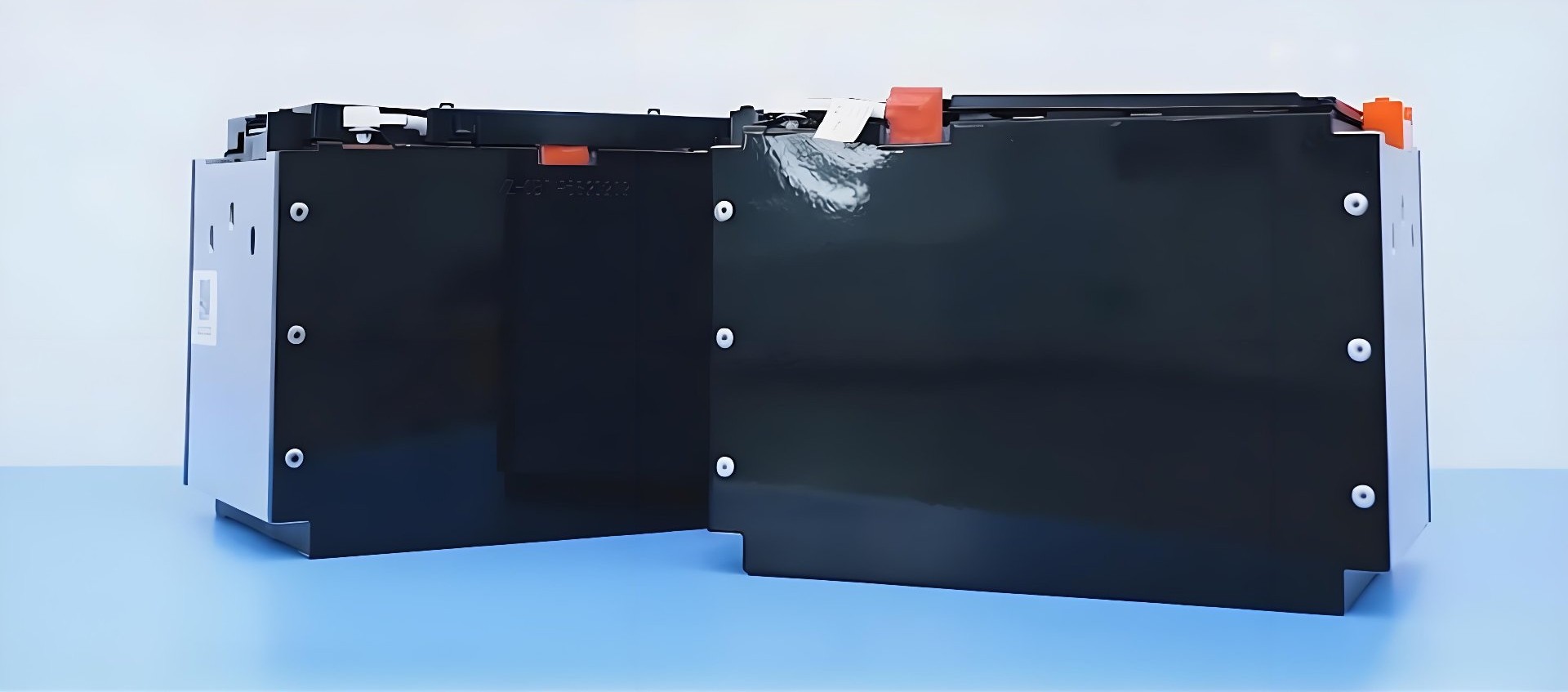
Cold storage: the one real limitation, planned properly
LiFePO4 cells must not be charged below 0 °C. Any supplier who skips that sentence is selling you a problem. It is a planning question, not a deal-breaker:
- Heated module on selected models — keeps the pack in its charging window in cold docks
- Charge in ambient — park the pack in a warm charging area, work the freezer
- Two-pack rotation — one works the cold room, one charges warm; often the cheapest answer for deep-freeze sites
Tell us your temperature range and shift pattern and we'll size the rotation with you.

Safety and protection, stated plainly
- LiFePO4 chemistry — the thermally stable lithium chemistry used in industrial packs
- BMS protection — over-charge, over-discharge, over-current and temperature cut-offs
- Steel enclosure, RAL 9017 — IP54 standard, IP67 on selected 48V models
- Explosion-proof pressure relief on selected 48V models (see each product page)
Documentation — test reports, transport documents, MSDS — depends on the model and your market. Ask for the set that applies to your model and we send exactly that.
Before you switch
Five checks that decide whether the project goes smoothly
Charger compatibility
A lead-acid charger will not do the job. Confirm a lithium profile, or budget for a charger.
Compartment dimensions
Length, width, height and how the pack is restrained — including the cable exit side.
Weight as counterweight
On counterbalance and reach trucks the pack's weight is part of stability. Never go lighter without checking.
Connector type
SB50 / SB175 / SB350, REMA 320 or GB port — the truck's existing plug decides the harness.
Local fire code & insurer
Charging location and signage rules vary by jurisdiction. Worth one call to your AHJ before install.
Operator training
Half an hour: how to read the display, when to plug in, what not to do. Prevents most avoidable issues.
FAQ
Questions buyers actually ask
Do I need a different charger?
Usually yes. Lead-acid chargers use a multi-stage profile built for flooded cells and will not charge a LiFePO4 pack correctly. Plan for a lithium-compatible charger in the project — we quote one with the pack, or confirm your existing charger if it has a lithium profile.
Is the pack a drop-in replacement?
Mechanically, the packs are designed around the compartment and cable routing of the lead-acid battery they replace. Electrically they need the right charger and connector. That is why every order starts with a fit check rather than a catalogue pick — and ends with the exact configuration confirmed in writing before production.
Can I opportunity-charge during breaks?
Yes — that is one of the main operational gains. LiFePO4 does not have the partial-state-of-charge penalty lead-acid has, so short top-ups during lunch and shift changes are normal practice rather than something to avoid.
Does the battery count as counterweight?
On most counterbalance and reach trucks the battery is part of the truck's rated stability, so the replacement pack's weight matters. Our packs are built to sit in the same weight band, and the fit check confirms it per truck model. Do not substitute a lighter pack without checking the truck's stability rating.
What happens in a freezer or cold dock?
Charging below freezing is the limit — LiFePO4 cells must not be charged below 0 °C. Options: a heated module on selected models, charging in an ambient-temperature area, or a two-pack rotation. We plan it with you before you buy rather than after.
How long does a battery swap project take?
Standard packs typically ship in 20–25 days; 40–45 days when the order includes dangerous-goods ocean packing. The physical swap on the truck is measured in hours, not days — the pack lands with the connectors and mounting configured for your compartment. Exact dates are confirmed on the order.
Do I have to modify the truck's electrical system?
No. The pack communicates over CAN on the truck's existing harness and lands on the original connectors and mounting points. The one thing to plan is the charger — see the first question.
What documentation comes with a pack?
Test reports and certificates vary by model and by market. Tell us which model you're considering and which approvals your site or insurer requires, and we send the documents that apply — we won't quote a certification we can't produce for that model.
Run the numbers on your own fleet.
Fleet size, shifts per day, current battery cost and charger setup — that's enough for a five-year comparison with the assumptions written down.
Start your fit check
Two minutes to send. The truck model is all we need to start — the rest is optional and lives in the same form.
- Truck make & model — one model is enough, or a photo of the data plate
- What you need — a quote, a cost comparison, a fit check, or just a question
- If you have them — compartment, connector, capacity, shifts, fleet size
First reply within 24 hours: a proposed model, an indicative price range, and the points we still need to check with you.